
8 Victorian Inspired Bedrooms to Recreate

Victorian-inspired bedrooms work best when they're treated as compositions, not collections of antiques. The surprising part is that the historical bedroom wasn't only a decorative retreat. In well-furnished homes, it often combined sleeping, dressing, washing, reading, and storage in one room, with furniture such as a washstand, wardrobe, dressing table, and chairs.
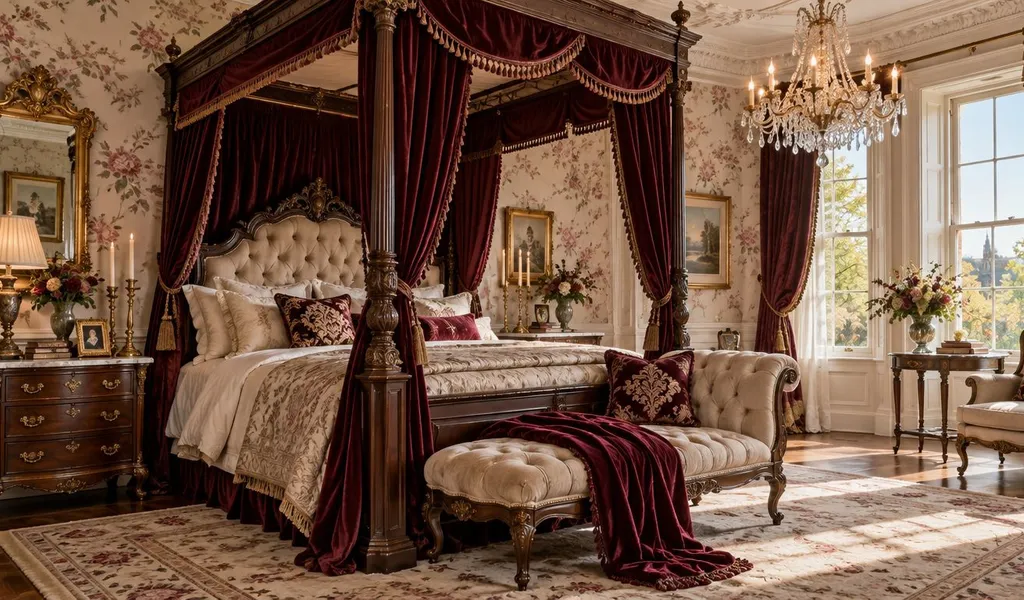
The challenge today is keeping that richness without turning the room into a theatrical set. The eight approaches below use one dominant focal point, then build support through pattern, reflective surfaces, upholstery, window treatments, exotic accents, fireplaces, and architectural detail. Evaluate every choice through five lenses: architectural authenticity, material contrast, scale, light, and practical adaptability. RoomStaging can help you compare furniture, finishes, color palettes, lighting, and renovation options before you buy, upholster, paint, or alter the room.
Table of Contents
- 1. Classic Four-Poster Canopy Bed with Velvet Drapes
- 2. Floral Wallpaper and Damask Patterns
- 3. Ornate Mirrors and Gilt-Framed Artwork
- 4. Heavy Velvet and Brocade Upholstery
- 5. Layered Window Treatments with Swags and Tassels
- 6. Chinoiserie and Exotic Accent Pieces
- 7. Ornamental Fireplaces with Marble Mantels
- 8. Rich Wood Paneling and Ceiling Details
- 8-Point Comparison: Victorian Bedroom Elements
- Turn the Look Into a Cohesive Bedroom Plan
1. Classic Four-Poster Canopy Bed with Velvet Drapes
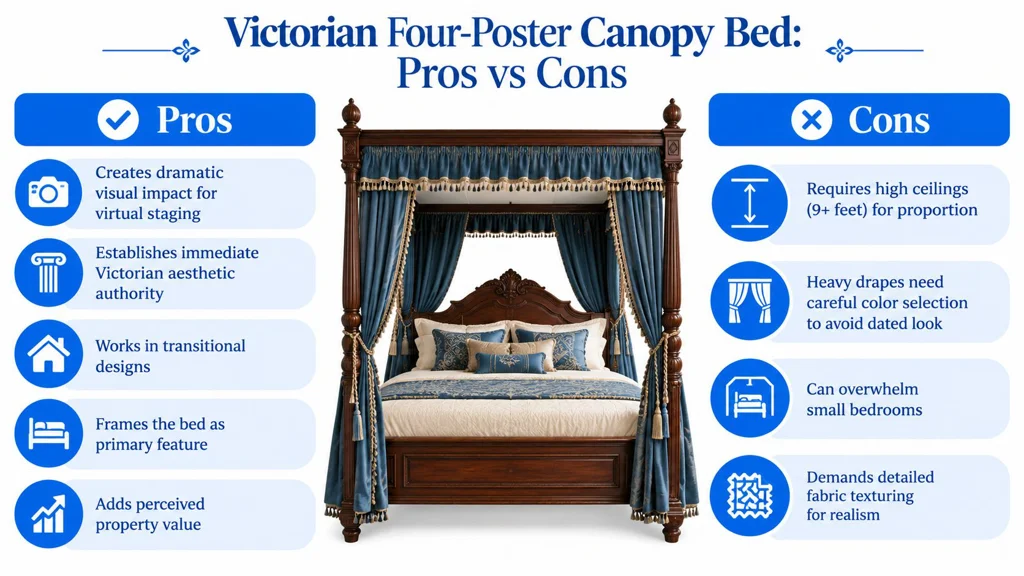
A four-poster bed gives a Victorian-inspired bedroom an immediate visual hierarchy. Its vertical posts draw the eye upward, while a canopy or partial drapery creates a smaller, more intimate room within the room. Historically, Victorian beds were often high from the floor and commonly made with dark woods or iron frames. Bed curtains and layered fabrics also helped create privacy and retain warmth in bedrooms shaped by cold nights and limited heating.
Choose the bed before choosing the wallpaper. A large carved frame can compete with an elaborate ceiling, a bold floral print, and heavily dressed windows. In a modest room, use a restrained canopy with fabric panels that hang inside the posts rather than extending across the whole ceiling. In a tall period room, full velvet or damask drapes can establish the grandeur the style needs.
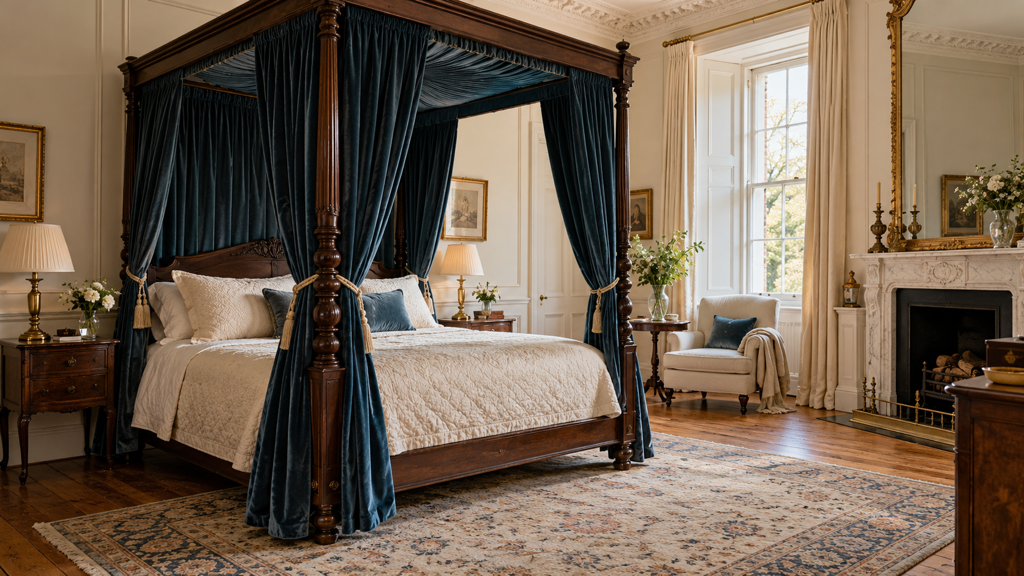
Make the bed the anchor
A dark wood bed works best against a quieter wall treatment. If the wallpaper is dense, let the upholstery carry a single deep tone rather than adding several competing colors. If the walls are pale, a carved mahogany or walnut frame can provide the material weight the room lacks.
Practical rule: Keep the strongest vertical detail in one zone. A dramatic canopy and elaborate full-height curtains may be beautiful separately, but together they can make a small bedroom feel compressed.
For empty property photographs, virtual staging can test whether the bed overwhelms the room before physical furniture arrives. RoomStaging's guide to staging a home virtually is relevant when you need to preserve original windows, ceiling height, doors, and circulation while comparing a high-backed bed with a simpler frame. Test dark velvet, muted damask, and an unupholstered wood version. The best option is the one that creates a focal point without blocking architectural features.
2. Floral Wallpaper and Damask Patterns
Victorian wallpaper should add depth, not merely announce a period theme. Floral, damask, and botanical patterns work because they create a continuous visual field behind the furniture. They also give a bedroom more character than a plain painted wall, especially when paired with a dado rail, painted trim, or a quieter ceiling.
The main decision is pattern scale. A small, tightly repeated floral can make a compact bedroom feel enveloped, but it may become visually noisy behind a carved bed. A larger damask gives the eye broader areas of rest, although an oversized motif can lose its rhythm on narrow walls. Use the room's geometry as the guide. In a bedroom with a chimney breast, bay, or alcove, a continuous wallpaper pattern can unify irregular surfaces rather than drawing attention to every change in depth.
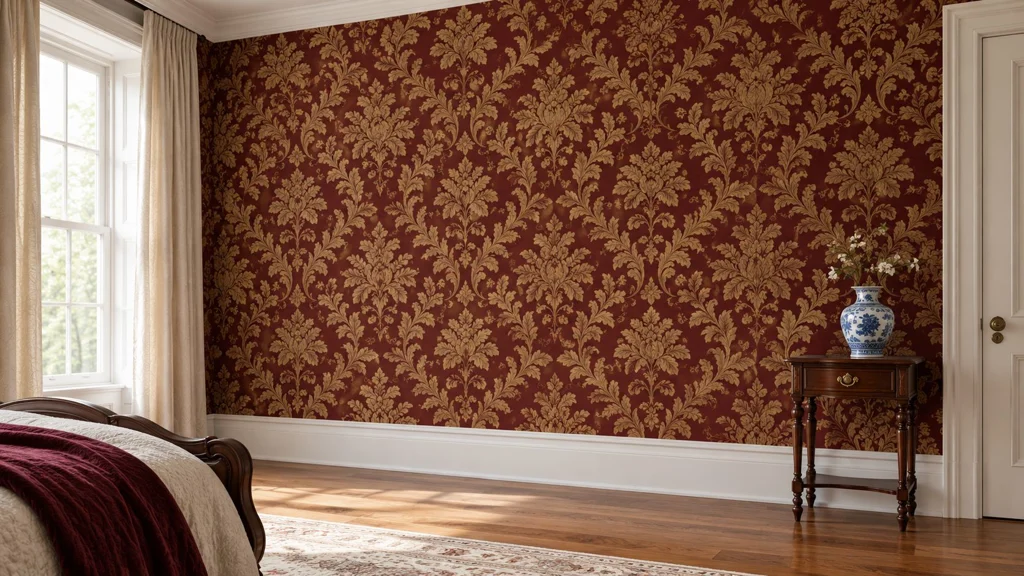
Control pattern through hierarchy
Select one primary pattern and let the other textiles support it. A floral wallpaper with a plain velvet headboard usually feels more deliberate than floral walls, a brocade bed, patterned curtains, and an ornate rug all competing at once. You can repeat a wallpaper color in piping, a cushion, or a lampshade without repeating the full motif.
For a lighter interpretation, try warm cream, dusty blue, sage, or a softened rose ground. Rich burgundy, emerald, and navy can look authentic, but they're not the only route. A pale background with dark wood, aged brass, and selective ornament preserves Victorian character while allowing daylight to remain part of the composition.
Use RoomStaging's interior design tool to compare wallpaper variations on the same room image. Start with the walls empty so you can judge the pattern's density, then add the bed and window treatments. High-resolution exports help you inspect the visual effect, but confirm the actual pattern scale and color with wallpaper samples. A practical scenario is an apartment bedroom with plain walls and limited daylight. Generate a darker traditional version beside a cream-and-sage version, then judge both for visual weight, furniture contrast, and perceived room width.
3. Ornate Mirrors and Gilt-Framed Artwork
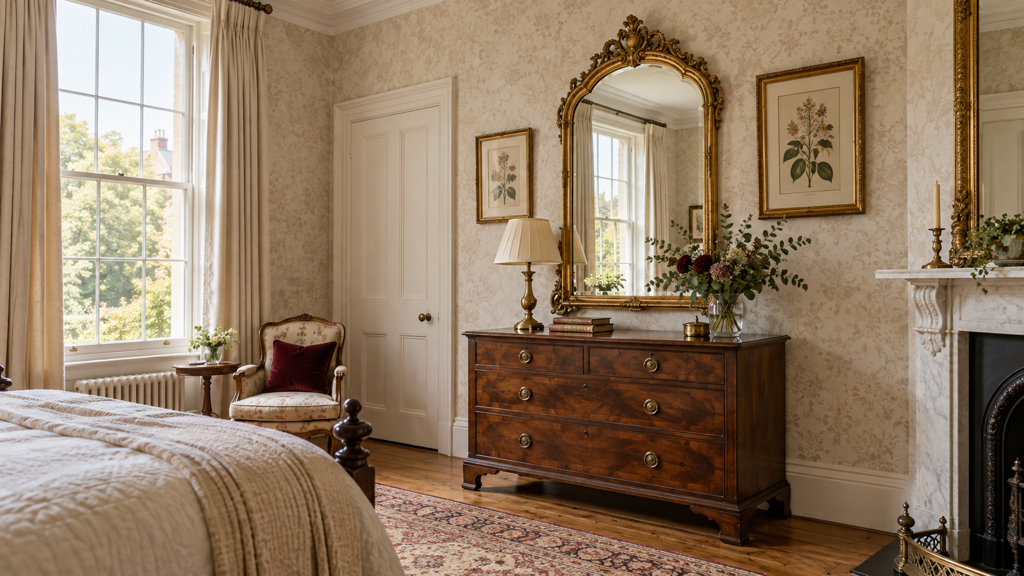
A mirror is both decoration and spatial equipment. In a Victorian-inspired bedroom, a carved or gilt frame introduces a strong outline, while the reflective surface catches daylight and reveals another layer of the room. Place it above a fireplace if one exists, or use a tall freestanding mirror where it can reflect a window, a pale wall, or a carefully composed furniture grouping.
The goal isn't to make the room look larger at any cost. A mirror facing a cluttered wardrobe or an unlit corner doubles the visual problem. Position it where the reflection contributes light, symmetry, or depth. In a narrow bedroom, a vertical mirror can reinforce ceiling height. In a wide room, a horizontal gilt mirror above a console can balance the bed's mass.
Pair reflection with artwork
Gilt-framed prints should relate to the mirror without forming a matched showroom set. Use one large mirror as the dominant reflective piece, then group smaller artwork nearby with variation in frame profile. A botanical print, subdued portrait, or architectural drawing can connect the decorative story to the wallpaper and upholstery.
Avoid placing every decorative object at eye level. The mirror, artwork, bedside lamps, and headboard already create a high visual band. A lower chest, upholstered bench, or rug can distribute attention across the room.
For a virtual concept, test the mirror opposite the main window and then on the wall beside the bed. Compare the reflected view, not just the frame. Realistic lighting and surface reflectivity matter because a flat-looking mirror breaks the illusion immediately. A renter might use one tall leaning mirror, secured according to its manufacturer's instructions, and two framed prints, while a homeowner with a mantel could use a single ornate overmantel mirror and keep the surrounding display restrained.
4. Heavy Velvet and Brocade Upholstery
Upholstery supplies the tactile layer that makes Victorian-inspired bedrooms feel settled rather than merely decorated. Dark velvet absorbs light and creates a soft, saturated field. Brocade introduces raised pattern and a more formal surface. Damask can connect upholstered furniture to patterned walls, but using it everywhere removes the contrast that makes each material noticeable.
Start with one upholstered statement piece. That might be a bedroom chair, a buttoned bench, a headboard, or a skirted stool. Then introduce a second textile at a different scale and finish. A velvet chair beside a waxed wood table creates a clear material conversation. A brocade bench on a patterned rug can work, but only if the wall and bed remain comparatively quiet.
Use weight strategically
Heavy fabric is especially effective at the foot of the bed because it grounds the composition and creates a visual stopping point. In a small bedroom, choose a narrow bench or compact slipper chair instead of a large chaise. The room should still offer a clear route from the door to the bed, wardrobe, and window.
A dark textile doesn't have to make the room gloomy. Balance it with pale walls, warm timber, reflective metal, or a lighter rug. In a warmer climate, use the appearance of velvet on one focal item rather than layering dense fabric across the bed, windows, and every seat.
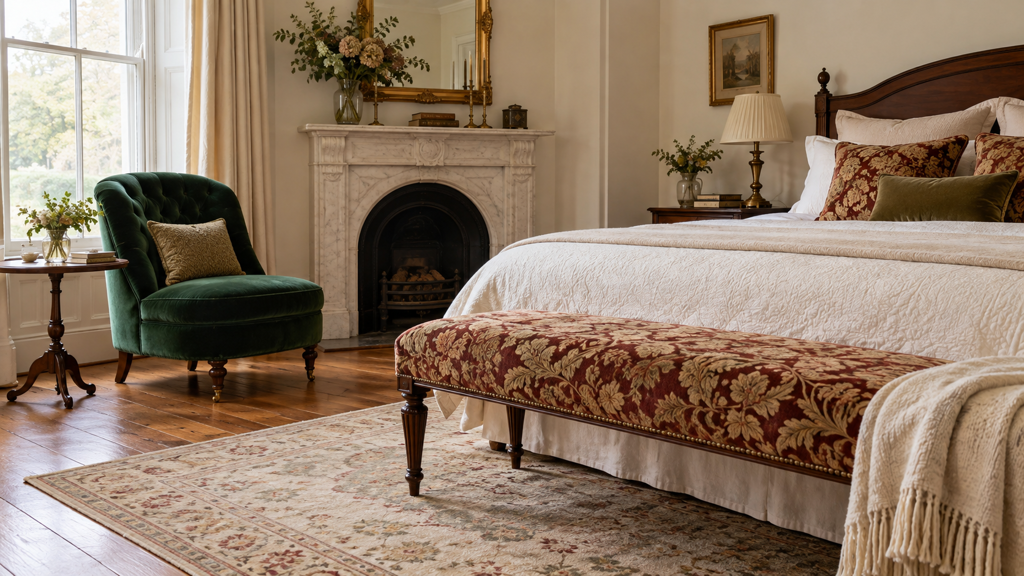
A practical staging comparison uses the same layout with three upholstery directions: deep green velvet, muted rust brocade, and a neutral woven fabric. Keep the furniture positions unchanged. This isolates the effect of color and texture, helping you decide whether the room needs stronger historical drama or more breathing space. Close-up renders can also reveal whether the fabric reads as tactile or artificial, which is particularly important when the image will be used to present a property or design proposal.
5. Layered Window Treatments with Swags and Tassels
Window treatments shape the light before they shape the style. Victorian rooms often used multiple layers, including substantial curtains, sheer fabric, decorative swags, tassels, braid, and ornamental rods. That density can create a convincing period impression, but it can also reduce daylight and make a contemporary bedroom feel burdened.
Use the window's proportions to decide how much treatment it can carry. A tall sash window may support a full-length curtain with a simple pelmet or restrained swag. A small apartment window may need only a lined side panel and a sheer layer. If the fabric covers too much glass, the room loses its most useful source of brightness.
Build the treatment in layers
Think of each layer as having a job:
- Sheer fabric: Softens glare while keeping the room visually open.
- Lined side curtains: Add color, insulation, and vertical emphasis.
- Swags or valances: Provide formal period detail, but should remain proportionate to the window.
- Tassels and braid: Supply small-scale ornament where the larger forms are already established.
Let the architecture carry some of the period character. You don't need every trim, tassel, and fringe detail to prove the theme.
Choose a window fabric that either echoes the primary wallpaper color or deliberately quiets it. A damask curtain against floral wallpaper can work when both share a subdued ground. If the patterns differ strongly in scale and contrast, use a plain curtain and let the hardware provide the decorative note.
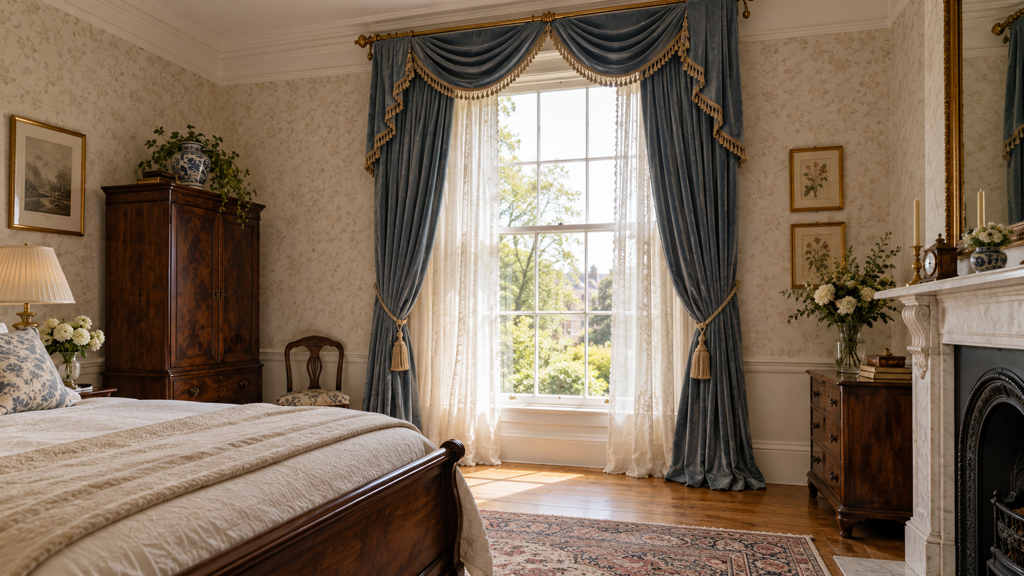
For virtual comparisons, inspect morning, afternoon, and evening versions. A treatment that looks luxurious in a bright render may make the room feel closed in under lower light. RoomStaging can help test curtain color, fullness, and placement while preserving the existing window geometry. The useful question isn't whether the most elaborate option looks impressive. It's whether the treatment frames the view, manages light, and leaves enough visual space for the bed and floor.
6. Chinoiserie and Exotic Accent Pieces
Victorian interiors often welcomed eclectic collecting, and Chinoiserie can bring that spirit into a bedroom without turning it into a themed installation. A lacquered cabinet, blue-and-white porcelain, embroidered silk cushion, or folding screen adds a different surface language from dark timber and floral wallpaper. The contrast gives the room a sense of curiosity and personal history.
Use one substantial accent or a small, connected group. A lacquered bedside cabinet can become the color interruption in a room dominated by walnut and burgundy. A folding screen can define a dressing corner, hide open storage, or create a backdrop for a chair. Small porcelain pieces work best when they're grouped on a tray or mantel rather than scattered across every available surface.
Keep eclecticism edited
The risk is not that Chinoiserie fails to suit Victorian design. The risk is that unrelated decorative objects flatten the room's hierarchy. Decide whether the accent's role is color, silhouette, function, or narrative. A blue-and-white vessel can repeat the wallpaper's cool notes. A black lacquer screen can reinforce the bed frame. A painted cabinet can provide storage while serving as the room's secondary focal point.
In a smaller bedroom, choose a single folding screen or narrow cabinet instead of several collectible objects. In a large room, an accent chair with an embroidered cushion can create a destination away from the bed. The room will feel more current when at least one element remains simple, such as a plain linen shade, unadorned wood surface, or modern bedside light.
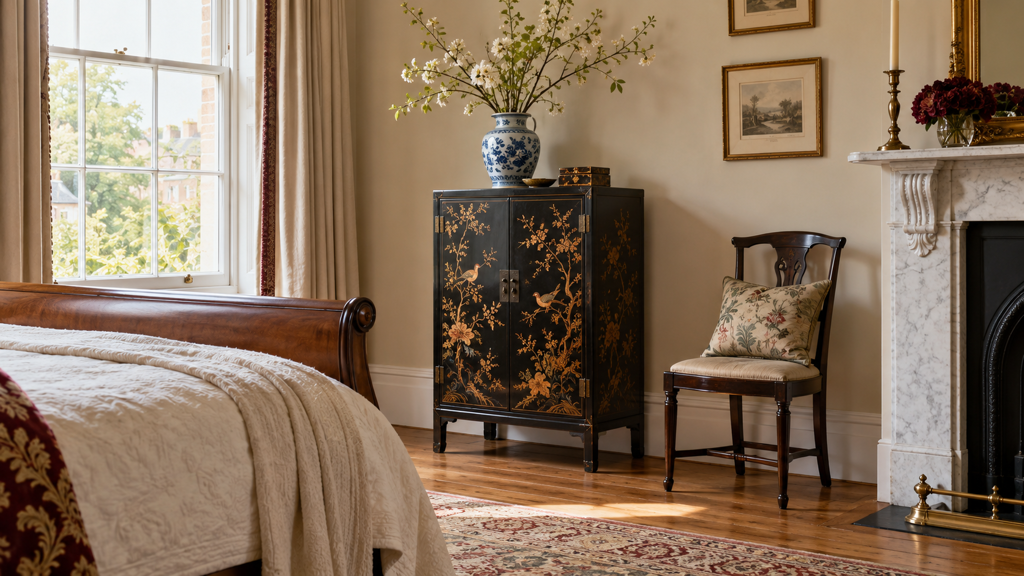
RoomStaging is useful for testing placement because the same accent can either enrich a composition or obstruct circulation. Generate the room with a lacquered piece near the dressing area, then move it beside the bed and compare the balance. A high-resolution result should retain the difference between painted lacquer, porcelain, embroidered fabric, and wood. If every surface looks equally glossy, the visual hierarchy disappears.
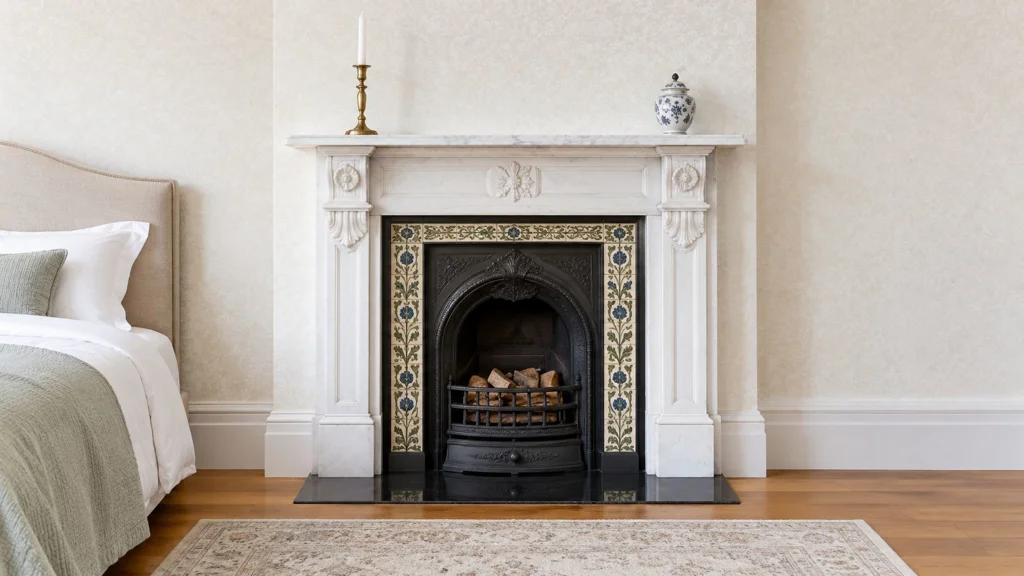
7. Ornamental Fireplaces with Marble Mantels
A Victorian bedroom fireplace should lead the composition. Because it is built into the room, its marble, granite, ornamental tile, cast iron insert, or decorated mantel establishes the period character before furniture is added. Fireplaces provided warmth before central heating became widespread.
Use the mantel as a horizontal counterweight to the bed. With the bed facing the fireplace, keep the central sightline open and arrange a compact group of candlesticks, an urn, a clock, or botanical objects. Leave enough marble visible to show the surround's proportion. If the bed sits perpendicular to the fireplace, place a chair or small reading table nearby so the hearth anchors a destination without requiring more large furniture.
Choose the right display density
A fuller mantel display works when the walls and bedding are relatively quiet. In a bedroom with elaborate wallpaper, reduce the number of objects and preserve negative space around each piece. The marble or tile should remain visible. Tall décor can obscure a mirror or artwork, weakening the focal outline, so keep the highest items toward the sides or remove them altogether.
A nonfunctional fireplace can still serve as the room's architectural focal point. Describe it accurately, however. A decorative surround does not provide heat, and an operating fireplace requires attention to safety, ventilation, and local building requirements.
For renovation planning, RoomStaging's interior renovation workflow can compare a pale marble surround, patterned tile, and dark stone while keeping the room's proportions intact. Test the finish first, then place the bed, chair, and rug so their sightlines support the hearth rather than create competing focal points. In a property listing, lead with restrained mantel styling so viewers read the fireplace as architecture first, then note that the surround can carry a denser display.
8. Rich Wood Paneling and Ceiling Details
Wood paneling changes the perceived proportions of a bedroom. Wainscoting can make tall walls feel grounded. A dado rail creates a horizontal division between furniture and upper-wall decoration. Full-height paneling creates enclosure, and dark finishes can make a small room appear dimmer and narrower.
Use dark walnut, mahogany, or oak selectively if the room has limited daylight. Panel the lower portion of the wall and keep the upper area painted or papered when you need more visual lift. In a generous bedroom with tall windows, full-height woodwork can provide the architectural weight required by a large canopy bed and substantial curtains.
Ceilings deserve equal attention. Cornices, medallions, beams, plaster relief, or a painted decorative scheme can draw the eye upward and balance dark walls. The detail should relate to the room's scale. A small ceiling medallion can look intentional in a compact bedroom, while heavy ornament across a low ceiling may make it feel lower.
Balance dark architecture with light
Use layered lighting rather than relying on one overhead fixture. Bedside sconces, a shaded central light, and reflected daylight can reveal grain and relief without flattening the surfaces. Warm wood needs contrast, so add pale bedding, a lighter rug, brushed or aged metal, or a softly colored ceiling.
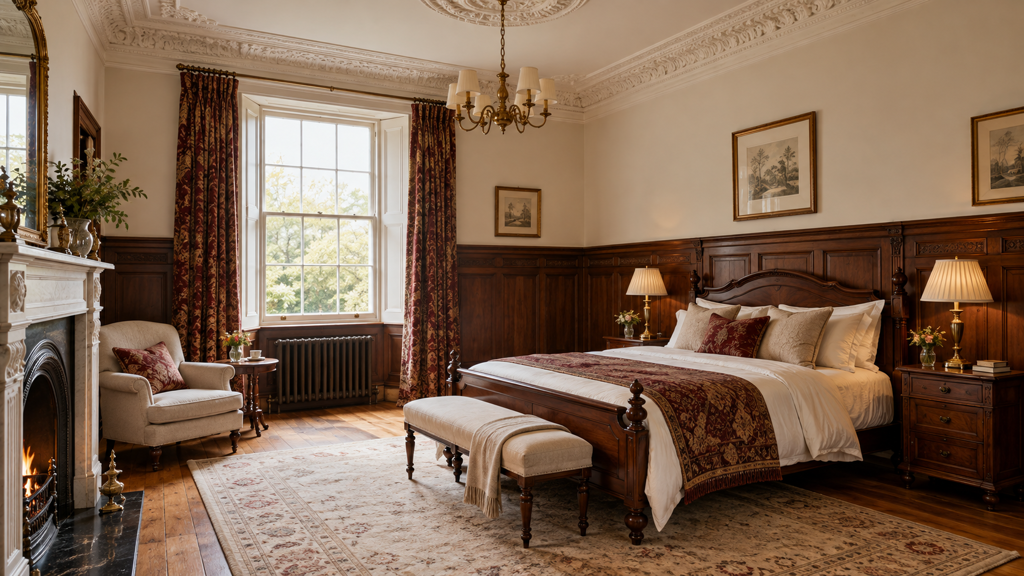
A useful virtual comparison starts with the original room geometry intact. Test lower-wall paneling, full-height paneling, and painted trim, then add the same furniture to each version. RoomStaging's regeneration options can help explore ceiling colors, gilded details, and restrained stencil effects before renovation work begins. The winning version should make the room feel more complete, not just darker or more expensive.
8-Point Comparison: Victorian Bedroom Elements
| Item | Visual Complexity | What to Check in a Preview | Expected Outcomes | Ideal Use Cases | Key Advantages |
|---|---|---|---|---|---|
| Classic Four-Poster Canopy Bed with Velvet Drapes | High, requires correct scale and proportional placement | Bed proportions, canopy clearance, and fabric appearance | Dramatic focal point, strong period authenticity, intimate warmth | Empty master bedrooms, luxury or historic listings | Immediately communicates luxury, anchors composition, adds visual drama |
| Floral Wallpaper and Damask Patterns | Medium, pattern scale and layering must be balanced | Pattern scale, repetition, and color balance | Transforms plain walls into rich backdrops, defines room character | Empty rooms needing visual interest, period restorations, quick style tests | High visual impact, rapid color/pattern trials, enhances authenticity |
| Ornate Mirrors and Gilt‑Framed Artwork | Medium, reflection accuracy and placement are critical | Reflected view, frame finish, and alignment | Increased perceived brightness and depth, elevated sophistication | North‑facing or small rooms, mantels and focal walls | Amplifies light and space, adds perceived depth, authentic luxury cues |
| Heavy Velvet and Brocade Upholstery | Medium‑High, texture nap and lighting require careful work | Fabric texture, color, and response to light | Conveys tactile luxury, richer visual warmth, perceived craftsmanship | High‑end stagings, bedrooms targeting affluent buyers | Strong luxury signal, photographs well, enables fabric variation testing |
| Layered Window Treatments with Swags and Tassels | High, complex draping and light behavior to simulate | Drapery proportions, glass coverage, and apparent light | Frames views, controls perceived light, enhances period authenticity | Rooms with architectural windows, historic properties | Demonstrates light control and privacy, adds visual depth and period detail |
| Chinoiserie and Exotic Accent Pieces | Low‑Medium, selective placement rather than large installations | Placement, material appearance, and color harmony | Adds distinctive character, memorable visual interest, eclectic flair | Listings seeking unique differentiation or collector appeal | Creates standout imagery, elevates perceived sophistication, adds personal character |
| Ornamental Fireplaces with Marble Mantels | Medium, material realism and mantel styling necessary | Stone or tile finish, visible surround, and mantel styling | Strong architectural focal point, anchors furniture layout, highlights original architecture | Historic homes, formal bedrooms, properties with original mantels | Communicates quality and status, versatile mantel styling, emphasizes craftsmanship |
| Rich Wood Paneling and Ceiling Details | High, wood grain, relief and lighting must be precise | Wood grain, decorative relief, and lighting balance | Conveys craftsmanship, warmth, and period authenticity | Properties emphasizing historic architecture and preservation | Primary authenticity signal, adds depth and character, highlights craftsmanship |
Turn the Look Into a Cohesive Bedroom Plan
A successful Victorian-inspired bedroom begins with the feature that already has the most authority. That might be a fireplace, bay window, ceiling medallion, original trim, tall window, or an unusually high ceiling. Preserve it, or identify it clearly before adding furniture. House & Garden's Victorian bedroom layout guidance notes that bed placement can influence circulation and focal emphasis, including arrangements parallel to windows or within a bay in suitable rooms. Layout should serve the architecture, not force the architecture to serve a decorative purchase.
Choose one dominant focal piece next. A four-poster bed is the obvious choice when the room lacks a strong architectural feature. A fireplace or ornate wall may take priority in a period property. Once you've chosen, keep the remaining elements subordinate. A room with a carved bed, bold wallpaper, full swags, gilt mirror, brocade chair, and heavily decorated mantel needs editing. Remove one layer before adding another.
Use a repeatable sequence:
- Preserve the strongest feature: Start with the fireplace, window, ceiling, trim, or paneling that defines the room.
- Set the focal point: Choose the bed or architectural element that should attract attention first.
- Establish a restrained palette: Select a dominant wall color, a wood tone, and one or two supporting accents.
- Add one primary pattern: Use wallpaper, a rug, curtains, or upholstery as the main patterned surface.
- Layer tactile fabrics: Add velvet, wool, linen, damask, or quilted bedding in different weights.
- Introduce reflection: Use one substantial mirror or a small group of metallic details to return light.
- Finish with edited ornament: Add artwork, porcelain, books, a clock, or botanical objects only where they support the composition.
The historical reference point is useful because Victorian bedrooms were designed as layered domestic systems, not as empty rooms with a decorative bed. This 1880 dressing table from a bedroom suite illustrates the use of dedicated furniture for private dressing. That suggests a practical modern translation. Include a real dressing surface, usable storage, a comfortable chair, and lighting that works after dark. Don't sacrifice circulation to create a photographically impressive corner.
Lightness is a valid adaptation. Cream walls, sage, dusty blue, warm woods, selective ornament, and uncluttered floor space can still communicate the style. Likewise, a warmer climate may call for fewer dense curtains and lighter bedding. Authenticity comes from the relationship between proportion, materials, pattern, and detail, not from making every surface dark.
Before committing, compare scale, daylight, door swings, window access, storage, and walking routes. RoomStaging can support that process through furniture removal, interior redesign, renovation previews, enhancement, and regeneration. Check the original room geometry in every version so you're comparing realistic alternatives rather than attractive but unusable concepts. AI previews cannot verify exact furniture fit or walking clearances; confirm these with measurements. Place the bed first, then the storage, then the chair and decorative accents. If the room works in its quietest version, the richer layers will feel intentional instead of crowded.
Use RoomStaging to remove existing furniture, test Victorian-inspired bedroom layouts, compare wallpaper and upholstery palettes, and preview renovation changes while retaining the room's proportions. Visit RoomStaging to create realistic design variations before committing to the physical work.