
10 Landscaping Curb Appeal Ideas for 2026

You're standing at the curb with a listing camera, a builder's presentation, or a renovation budget in hand. The house may be sound, but the front yard looks tired, the entry gets lost, and the first view doesn't communicate the property's potential. A few deliberate changes can make the exterior look more finished, welcoming, and market-ready without rebuilding every visible feature.
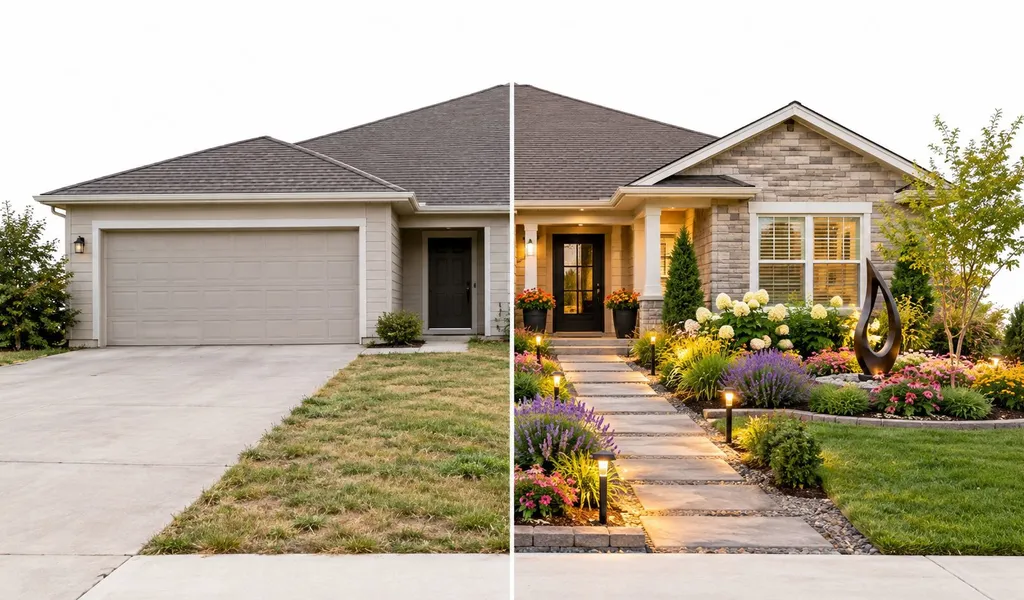
The strongest landscaping curb appeal ideas address what people notice first: the route to the door, the structure of the planting, lawn condition, lighting, hardscape, focal points, seasonal interest, and small flexible displays. Buyers care about this presentation. A survey found that 89% of homeowners care about curb appeal, while 68% of buyers consider poor curb appeal a dealbreaker.
The examples below pair each upgrade with before-and-after photo guidance, practical trade-offs, and an implementation checklist. If you're unsure how a new path, planting scheme, or lighting plan will look, RoomStaging can help preview exterior redesign concepts before construction or planting decisions.
Table of Contents
- 1. Front Garden Design With Layered Planting and Balanced Composition
- 2. Welcoming Entryway Lighting Design
- 3. Clean, Defined Hardscaping With Quality Materials
- 4. Focal Point Landscaping Features
- 5. Seasonal Color Integration and Rotation
- 6. Lawn Quality and Maintenance Excellence
- 7. Native Plant and Pollinator-Friendly Design
- 8. Strategic Use of Color, Contrast, and Visual Pop
- 9. Outdoor Container and Potted Plant Displays
- 10. Defined Entry Statement With Architectural Features
- Top 10 Curb Appeal Ideas Comparison
- Turn the Best Idea Into a Stronger First Impression
1. Front Garden Design With Layered Planting and Balanced Composition
A layered front garden gives buyers a clear view from the street to the door. Set taller ornamental grasses, shrubs, or narrow evergreens toward the rear, medium-height plants through the middle, and low perennials or edging plants beside the path. The result adds depth without hiding the entry.
Balance is about visual weight, not exact duplication. A formal façade may suit matching shrubs or planters on both sides of the door. An informal border can place one larger shrub opposite several smaller plants, provided the groups feel equal in scale. Repeated species and odd-numbered groupings, such as three or five plants, usually look more intentional than scattered single specimens.
Practical rule: Design from the street backward. Check mature height and spread before planting. A nursery-sized specimen can overwhelm a narrow façade within a few seasons.
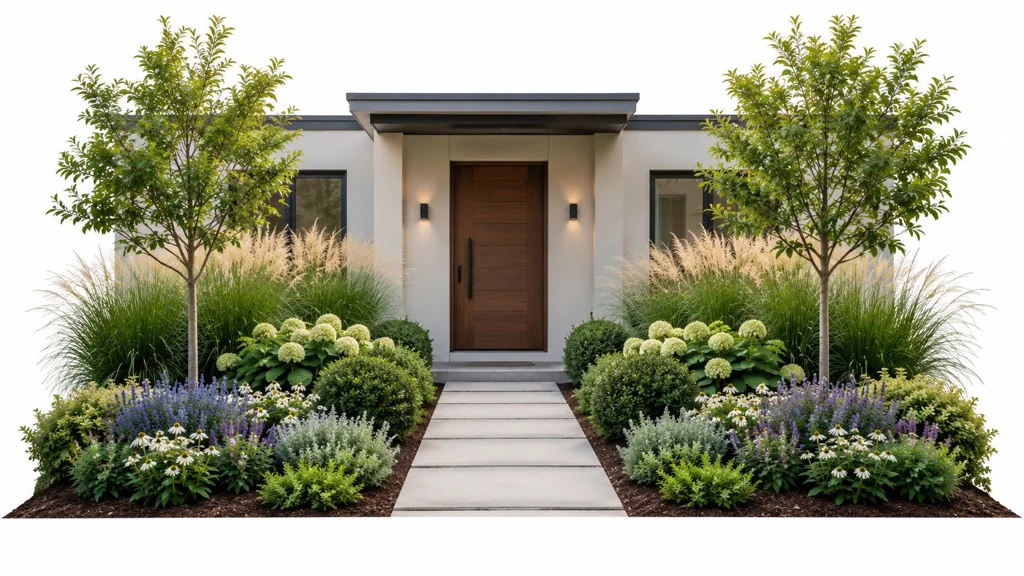
For useful before-and-after listing photos, keep the camera at the same street-level position. Show the original flat or overgrown border, then the finished planting with the entry axis, path, and spacing visible. The comparison should make the improvement easy to judge.
Use this implementation checklist:
- Map exposure: Record sun and shade before selecting plants.
- Choose an axis: Align the strongest visual line with the door, path, driveway, or façade center.
- Select for maturity: Confirm final height and spread, not only container size.
- Group with intent: Repeat plants or colors so the border feels composed rather than collected.
Native species suited to the local climate can reduce maintenance, but placement, drainage, and spacing still determine performance. Use RoomStaging's exterior design feature to test layered planting, symmetry, and informal balance before committing to purchases or installation.
2. Welcoming Entryway Lighting Design
A dim doorway can disappear in an evening listing photo, while excessive brightness makes the property feel harsh and commercial. Start with the front door, then build a controlled route outward using warm LED sconces, low path lights, and limited uplighting.
Place sconces beside the door so faces, hardware, and house numbers remain visible. Path lights should mark the walking route without creating a runway effect. Uplights can draw attention to a column, specimen tree, or textured wall. Recessed step lights add safety where the grade changes. A porch fixture should define the threshold without competing with the façade.
Use warm light in the 2700K to 3000K range for a residential atmosphere. Timers and motion sensors reduce unnecessary operation, but test their settings before evening showings so the entrance does not go dark at the wrong moment. Image enhancement tools can help assess exposure, sky, and contrast in exterior photos, though they cannot replace a properly designed installation.
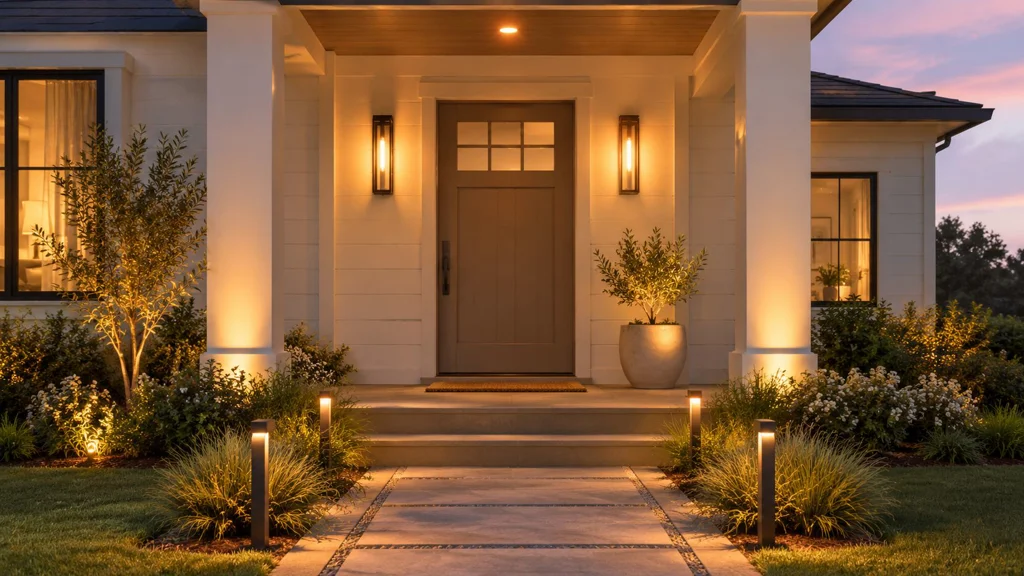
Photograph the before view from the same street-level position, either in flat daylight or after dark with the existing fixtures. The after image should show the path, door, and architectural details without harsh glare or deep black areas.
- Layer sources: Combine sconces, path lights, and selective accents.
- Control glare: Aim lamps away from the street and normal eye level.
- Protect the façade: Conceal wiring neatly and choose weather-rated fixtures.
- Check the camera view: Walk back to the street and inspect the brightest and darkest areas.
The practical trade-off is fixture count versus balance. Additional lights help only when they clarify the entry and add depth. Excessive output can flatten planting, obscure architectural texture, and weaken the listing image.
3. Clean, Defined Hardscaping With Quality Materials
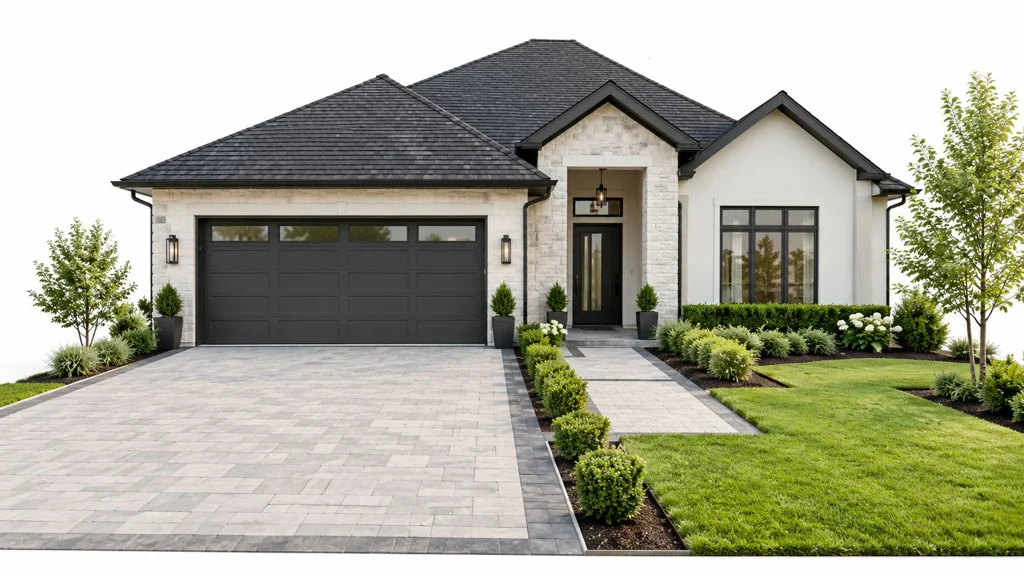
A driveway or walkway occupies a large part of the street view, so cracked, stained, or poorly edged hardscape can undermine otherwise healthy planting. Clean pavers, natural stone, gravel, or well-maintained concrete give the front yard a firm visual framework and make the route to the door easier to understand.
Match the material to the architecture. A herringbone paver drive may suit a traditional façade, while large-format concrete or restrained gravel may work better with a modern house. Natural stone can look excellent, but inconsistent pieces and weak edging quickly make it appear improvised. Permeable pavers can support drainage while preserving a finished appearance.
Hardscape should direct attention, not compete with the house. The best path makes the entrance feel inevitable.
Before-and-after photography works best from the driveway or sidewalk, where stains, loose edges, weeds, and path alignment are visible. Show the same angle after cleaning, repairs, edging, and any material changes.
Use this order of work:
- Repair first: Reset loose pavers and address cracks or settlement.
- Confirm drainage: Build visible surfaces with a 1% to 2% grade where appropriate, verified by the installer and local conditions.
- Create definition: Add a contrasting border or crisp edge between paving and planting.
- Maintain the finish: Power wash regularly and seal compatible pavers or stone as needed.
RoomStaging's exterior redesign tool can help compare paver colors, borders, patterns, and material directions before purchasing. It won't confirm engineering, drainage, or local approvals, so treat the visual as a design aid rather than a construction plan.
4. Focal Point Landscaping Features
A focal point gives the eye somewhere to land. That might be a specimen Japanese maple, flowering cherry, fountain, sculpture, arbor, or pair of masonry columns. The right feature organizes the rest of the front yard and can make a listing image more memorable.
Start with the street view and entry view. A sculpture hidden behind a shrub has little value in presentation, while a fountain placed directly in the center of a narrow path may obstruct circulation. Scale matters, too. A small yard usually benefits from one strong accent, not several competing objects.
Consider a contemporary house with a low planting bed and a single sculptural tree. The tree creates height and seasonal character without adding a bulky structure. A traditional home might use a central fountain surrounded by tiered planting, but that choice creates an ongoing maintenance obligation. Water features need cleaning, working pumps, and careful winter preparation in cold climates.
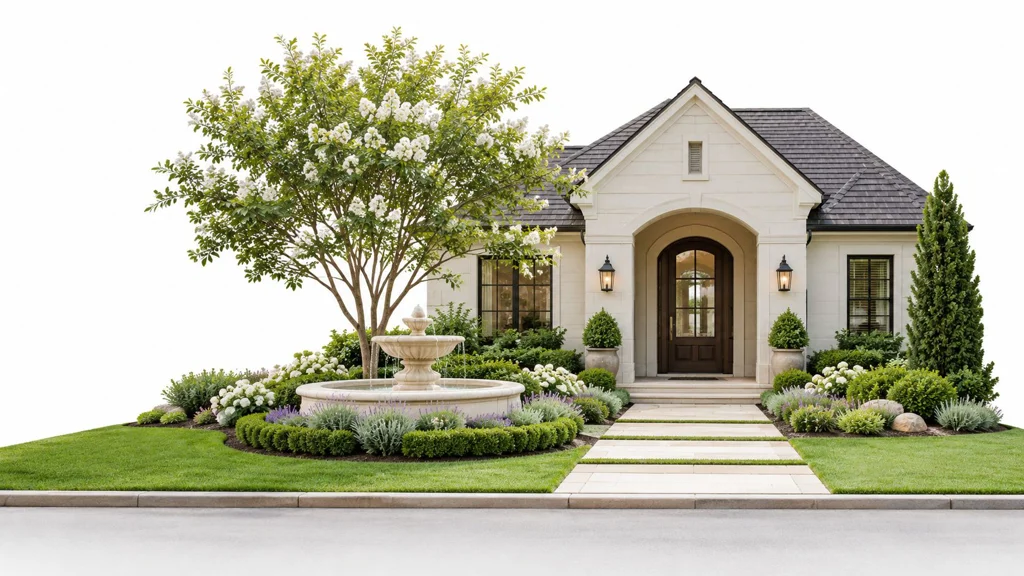
For a useful before-and-after, photograph the original yard with no clear anchor, then show the focal element from the same vantage point with compatible planting and lighting. Don't hide the improvement behind a dense foreground.
- Place for visibility: Check the feature from the road, walk, and front door.
- Match the architecture: Use materials and forms that belong with the home.
- Control scale: Leave enough open space around the focal point.
- Budget for care: A neglected fountain, dead tree, or peeling arbor reduces appeal.
Use RoomStaging's exterior redesign capability to test placements and surrounding plant masses before committing. Previewing alternatives is particularly useful when a focal point will be permanent or expensive to relocate.
5. Seasonal Color Integration and Rotation
A property shouldn't depend on one short flowering period to look attractive. A more resilient front garden combines spring bulbs, summer perennials, fall foliage, and winter structure so the exterior remains presentable when the listing, inspection, or buyer visit happens.
Build the composition around evergreens, bark, branching structure, or persistent grasses. Add spring daffodils and tulips, summer coneflowers and annuals, fall asters and foliage, then leave selected grasses and evergreen forms in place for winter interest. A specimen tree can contribute spring flowers, summer shade, autumn color, and visible branching after leaf drop.
The practical challenge is coordination. A bed filled with spring bulbs may look empty later, while a border relying only on annuals requires repeated purchases and replanting. Use a plant calendar to identify gaps rather than choosing every plant from a single bloom-time display.
For before-and-after photos, compare the same bed in its weakest season with a planned seasonal version, or use separate images to show spring, summer, and autumn changes. Don't present a digitally lush summer scene as if it represents the property all year.
- Map bloom windows: List what carries the bed through each season.
- Keep a framework: Use evergreens and durable shapes as the base.
- Rotate lightly: Use containers for seasonal color that can change without disturbing permanent planting.
- Edit regularly: Deadhead, remove spent annuals, and cut back only when appropriate.
RoomStaging's exterior redesign tool can preview seasonal versions of the same frontage, helping sellers and builders choose a plan that remains credible across listing dates.
6. Lawn Quality and Maintenance Excellence
A well-maintained lawn acts like a visual frame. It separates planting beds from the street, gives the façade breathing room, and signals that the property receives regular care. It doesn't need to be the largest feature in the yard, especially where water restrictions or local climate make turf expensive to maintain.
Start with the basics. Match grass species to the climate, test soil before applying amendments, repair bare patches, and edge every bed and walkway cleanly. Mow at the recommended height for the selected grass, often within the 2.5 to 3.5 inch range, and keep mower blades sharp so the grass is cut rather than torn.
A seller with limited time should prioritize visible consistency over ambitious lawn renovation. Freshly mown turf, crisp edges, controlled weeds, and cleared clippings can outperform a newly seeded area that looks patchy during the listing period. Deep, less frequent watering is generally more useful than shallow daily watering, but local restrictions and soil conditions should guide the schedule.
Maintenance beats novelty: A simple lawn with clean edges usually photographs better than an elaborate garden surrounded by neglected turf.
Before-and-after images should show the same sightline with overgrown edges, thin areas, or uneven mowing in the first frame and a clean, calm lawn in the second.
- Repair visible defects: Address bare patches, weeds, and disease early.
- Set a mowing pattern: Consistent stripes can add order without changing the setting.
- Protect the border: Keep turf from creeping into beds and paving.
- Consider alternatives: Native or drought-tolerant grasses may reduce long-term inputs where they suit the site.
7. Native Plant and Pollinator-Friendly Design
A low-maintenance front yard doesn't have to look sparse. Regionally appropriate plants can create dense, layered interest while reducing the need for supplemental water, chemicals, and constant replacement. They also give a builder or seller a credible sustainability story, provided the planting looks intentional rather than abandoned.
The design should reflect local conditions. California coastal planting might use manzanita, ceanothus, and toyon. A Midwest border could combine black-eyed Susans, coneflowers, and native grasses. A Southeast shade garden may rely on native azaleas, dogwood, and shade perennials, while a mountain pollinator bed could feature columbine, yarrow, and bee balm.
The trade-off is visual expectation. Native planting often has a more naturalistic rhythm than clipped foundation shrubs and annual beds. That can appeal to buyers seeking climate-aware landscaping, but a seller should define edges, repeat forms, and keep paths clear so the yard reads as designed.
Research plants for the local hardiness zone and microclimate, then verify recommendations through a native plant nursery or cooperative extension. Group plants by water needs, allow selected stems to provide winter structure, and explain the maintenance approach in a listing or builder presentation.
For the photo comparison, show a thirsty, turf-heavy frontage before the change and a structured native planting after it. Keep the camera angle, season, and surrounding façade consistent so viewers see the design rather than a change in photography.
8. Strategic Use of Color, Contrast, and Visual Pop
Color can produce a noticeable visual change without moving a path or rebuilding a bed. The key is restraint. Choose a base palette that relates to the siding, roof, trim, and hardscape, then repeat one or two accent colors across the frontage.
A cool-toned house might use purple petunias, blue-purple perennials, and silvery foliage against green lawn. A warmer façade could support yellow coreopsis and burgundy coral bells. A red Japanese maple can anchor quieter blue and green planting, while white-flowering dogwood can brighten a shaded garden of hostas and ferns.
Don't scatter every attractive flower through one border. Saturated accents can photograph strongly, but too many unrelated colors make the frontage look busy. Repeating one color in a container, bed, and entry planter creates a visual connection that buyers can understand from the street.
A strong before-and-after image should show the same border before color organization and after the planting has been edited into a clear palette. Shoot in more than one light condition when possible. A color that looks balanced in soft morning light may become harsh under strong afternoon sun.
- Coordinate first: Pull colors from existing exterior materials.
- Repeat accents: Place related colors in at least two visible areas.
- Balance temperature: Combine warm and cool notes deliberately.
- Preview the season: Make sure the palette doesn't collapse when one plant finishes flowering.
RoomStaging's exterior redesign tool can test alternative planting colors and combinations before you purchase seasonal plants or commit to a permanent specimen.
9. Outdoor Container and Potted Plant Displays
Containers offer a fast, reversible way to improve a front entrance without rebuilding permanent beds. Matching urns beside the door can frame the approach, while a stepped group on a porch adds height where planting feels flat. A substantial pot with an evergreen gives a sparse frontage structure through more than one season.
Match the container to the house. Dark pots can repeat a roof or window frame, while stone-colored finishes can relate to masonry. Three containers at different heights create a relaxed rhythm. A matching pair usually supports a formal entry. Window boxes extend color across a low façade, but they add watering and fastening requirements.
Budget for upkeep before buying. Containers dry faster than in-ground beds, require drainage, and may need fresh soil and replacement plants as seasons change. Undersized or poor-quality pots also make the display look temporary. Use quality potting mix, combine trailing and mounding plants for fullness, and add timers or self-watering systems if frequent care is unlikely.
For before-and-after photos, shoot the same doorway empty or with mismatched pots, then show the edited arrangement from the same angle. Leave the walkway clear, preserve access to house numbers, and check the display from the street as well as the porch.
A listing team can stage a home virtually to compare urns, window boxes, and seasonal displays in exterior photos before moving heavy planters or purchasing plants.
10. Defined Entry Statement With Architectural Features
Make the front door read as a destination rather than a gap between the driveway and lawn. An arbor, gate, covered porch, column, pergola, or framed path can define that transition and connect the grounds to the house.
Match the feature to the building. A narrow home may suit a simple arbor with coordinated vines and low planting. A larger traditional property can carry substantial columns or a covered porch. A modern home may need only a crisp path, a paving change, and focused lighting at the threshold. The goal is architectural continuity, not a competing style.
Before-and-after photos should show the same viewpoint. Start with the existing steps, path, or awkward space, then photograph the revised entry with the door centered and the route unobstructed. Real estate makeover examples show how realigning steps with the front door can make an entry feel brighter and more inviting, while a deck or platform can fill an awkward gap between house and curb.
Keep access obvious and comfortable. A tall gate or dense screen may provide privacy, yet it can hide the house and leave visitors unsure where to walk. Relate paint or stain to the façade, use selective uplighting, and inspect visible surfaces before listing photos.
- Check proportion: Keep a small arbor from overpowering a modest façade.
- Clarify movement: Combine paving, planting, and light to lead toward the door.
- Coordinate materials: Repeat stone, timber, metal, or paint already used on the house.
- Plan upkeep: Inspect vines, paint, drainage, and hardware regularly.
RoomStaging's exterior redesign feature can preview entry styles, materials, path alignment, and surrounding planting before construction or renovation.
Top 10 Curb Appeal Ideas Comparison
| Item | Implementation complexity | Resource requirements | Expected outcomes | Ideal use cases | Key advantages | Key limitations |
|---|---|---|---|---|---|---|
| Front Garden Design: Layered Planting and Balanced Composition | Moderate–high (design planning, staging) | Varied plants, soil prep, ongoing maintenance; moderate initial cost | Depth, framed entrance, strong curb appeal and photos | Small to medium front yards, listings, both modern & traditional homes | Immediate visual impact; organizes massing; photogenic | Needs pruning/maintenance; initial cost; potential sightline issues |
| Welcoming Entryway Lighting Design | Moderate (lighting plan + electrical, often pro install) | Fixtures, wiring, timers/controls, LED bulbs; moderate–high cost | Enhanced safety, nighttime curb appeal, highlighted architecture | Evening showings, security-focused homes, architectural emphasis | Improves safety; extends usable hours; boosts photos | Electrical work required; maintenance; risk of glare/light pollution |
| Clean, Defined Hardscaping with Quality Materials | High (construction, grading, drainage) | Stone/pavers/concrete, contractor, possible permits; high cost | Polished, durable, functional exterior with clear structure | Driveways, high-traffic yards, luxury listings | Long‑lasting, low upkeep vs plantings; organizes flow; premium feel | High upfront cost; repairs/poor drainage can be expensive |
| Focal Point Landscaping Features | Low–moderate (placement and selection; some installation) | Feature element (fountain/sculpture/tree), installation; variable cost | Memorable focal anchor; organized composition; marketing stand-out | Medium to large properties, entry views, photo-centric listings | Distinctive curb appeal; anchors design; strong marketing impact | Must match style/scale; can be costly; maintenance (esp. water features) |
| Seasonal Color Integration and Rotation | Moderate (bloom-time planning, rotation) | Diverse bulbs, perennials, annuals; seasonal labor and replacements | Year‑round color and consistent photographic appeal | Properties listed in any season; buyers valuing year‑round interest | Maintains curb appeal across seasons; shows planning sophistication | Ongoing planting and upkeep; bloom windows and climate limits |
| Lawn Quality and Maintenance Excellence | Low–moderate (routine care, seasonal programs) | Seed/sod, irrigation, fertilizers, mowing/aeration; steady cost | Clean, uniform turf that frames landscape and boosts first impressions | Universal use; especially effective for modest landscapes | High impact for cost; easy to understand value; frames design | Requires consistent maintenance; climate/pest vulnerabilities |
| Native Plant & Pollinator‑Friendly Design | Moderate (species selection, ecological planning) | Sourcing native species, establishment care; lower ongoing inputs | Sustainable, low‑input landscape that supports wildlife | Eco‑conscious buyers, low‑water regions, naturalistic sites | Low water/chemical needs; supports pollinators; authentic regional look | May appear informal; nursery availability varies; initial establishment |
| Strategic Use of Color, Contrast & Visual Pop | Low–moderate (palette planning, plant placement) | Color-focused plantings and accents; generally affordable | Immediate visual/pop impact and stronger listing photography | Budget updates, staging, properties needing more visual interest | Cost‑effective; flexible; strong photogenic results | Risky color choices; can clash or date quickly; seasonal limits |
| Outdoor Container & Potted Plant Displays | Low (easy to install and change) | Quality containers, potting mix, plants, regular watering; moderate recurring cost | Flexible, seasonal accents that frame entries and photos | Rentals, porches, small yards, temporary staging | Portable, affordable, quick to update; high immediate impact | Needs frequent watering/soil refresh; quality pots can be costly |
| Defined Entry Statement with Architectural Features | High (design, construction, permits, pro labor) | Arbors/porches/columns/gates, materials, contractor; high cost | Strong, permanent focal entry that dramatically improves curb appeal | Homes with compatible architecture, high‑end listings, major renovations | Powerful first impression; anchors landscape; increases perceived value | Significant investment; coordination/permits required; ongoing upkeep |
Turn the Best Idea Into a Stronger First Impression
The most effective curb appeal project isn't always the largest one. A seller may need crisp lawn edges, trimmed shrubs, fresh mulch, and a visible front door before considering a new fountain or custom pergola. A builder may need to solve path alignment and planting scale early, while a property manager may benefit more from durable materials and low-maintenance native beds than from seasonal displays that require constant replacement.
Start by photographing the existing exterior from the street, driveway, path, and front door. Use the images to identify the one change with the clearest before-and-after effect. If the door disappears, improve the entry sequence. If the yard feels flat, add layered planting or a focal tree. If the frontage looks neglected, handle mowing, trimming, cleaning, and hardscape repairs before decorative work.
Data supports a practical priority order. The 2023 curb appeal survey found that 82% of homeowners rated landscaping as a major improvement, while 57% said a beautiful exterior improves a home's value by at least $20,000 and 16% said the increase exceeds $50,000. Respondents also judged a high-curb-appeal house to be 34% more valuable than the same house with poor curb appeal. Those figures don't justify every expensive upgrade, but they do show why planting, lawn care, and front-yard presentation deserve attention before listing.
Older valuation research points in the same direction. A Virginia Tech study reported perceived value increases ranging from 5.5% to 11.4% when properties moved from average to excellent, while a Michigan study found a 12.7% increase from the least valued to the most valued (Builder Online's landscape research summary). Extension research also summarizes front-yard planting contributions at roughly 5% to 12% of perceived single-family home value, with one Texas study reporting up to 17% when exterior features and surrounding property were considered together.
Those numbers describe perceived value, not a guaranteed sale price. They also don't mean that a premium fountain, elaborate lighting plan, or oversized planting bed will outperform basic maintenance. NAR reports that 97% of its members believe curb appeal matters to buyers, and 92% recommend improving it before listing, with groundskeeping, lawn care, and tree care among the most commonly recommended projects.
Before finalizing the work, check mature plant size, irrigation demand, seasonal appearance, lighting glare, drainage, accessibility, and the time required to keep every visible feature presentable. Then photograph the completed exterior in consistent conditions and use those images in listing materials, builder presentations, or renovation discussions. When the decision is difficult to visualize, preview planting, hardscape, lighting, seasonal color, or entry concepts with RoomStaging before spending on materials or labor. You can test the exterior through RoomStaging's exterior design tools, refine the image with image enhancement, and use the platform's related guidance on virtual home staging to keep presentation consistent.
Choose one visible improvement, define the before-and-after view, and make the maintenance plan part of the design. A polished, credible frontage will usually do more for a listing or build presentation than a collection of disconnected upgrades.
RoomStaging turns property photos into photorealistic exterior redesigns, including landscaping, materials, lighting, seasons, and entry changes. Upload an existing exterior, test a concept, and compare options before committing to plants, paving, or construction by visiting RoomStaging.